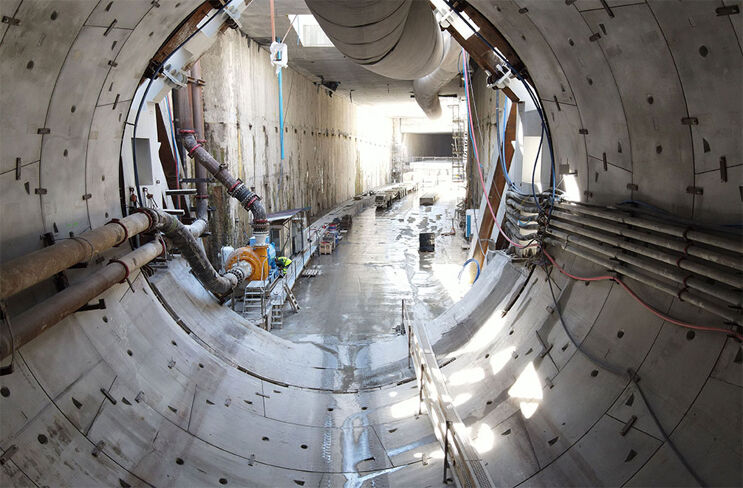
Modern tunnel construction faces a variety of complex challenges that require innovative planning approaches and advanced technologies. Dynamic loads caused by traffic or seismic activity place high demands on the stability and durability of tunnel structures. Additionally, repeated stresses can negatively affect the fatigue behaviour of the materials used and cause gradual damage that jeopardises the lifespan and safety of a tunnel.
Particular risks arise from cracks in the concrete, which not only impair load-bearing capacity but can also accelerate corrosion of the reinforcement and allow water ingress.
Furthermore, the fire resistance of tunnel structures plays a crucial role: in the event of a fire, they must withstand extreme temperatures to ensure the safety of users and emergency personnel.
These challenges highlight the importance of using proven and innovative technologies for safe, durable and sustainable tunnel construction. They form the basis for successfully implementing modern infrastructure projects and meeting the high demands for functionality and safety.
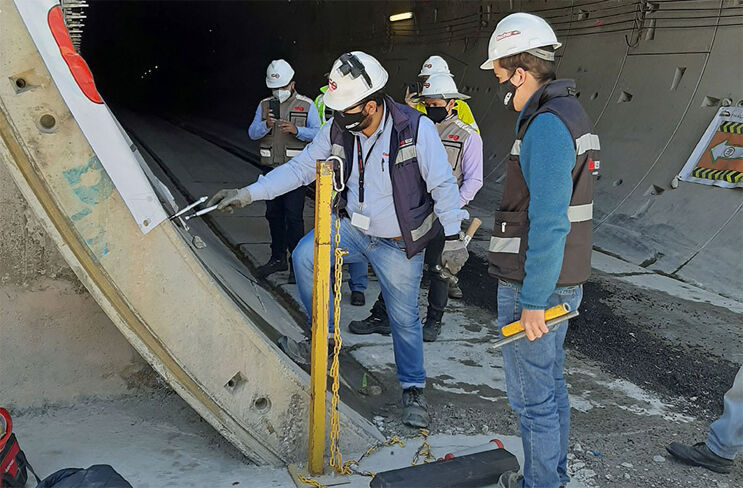
In new tunnel construction and the refurbishment of existing tunnel structures, fixing systems play a central role in the load-bearing capacity and stability of the construction. They must withstand not only static and dynamic loads during the construction phase and operation but also resist corrosion in the long term. These requirements are particularly relevant as tunnel structures can be continuously subjected to traffic loads and mechanical vibrations. Additionally, seismic impacts must be taken into account.
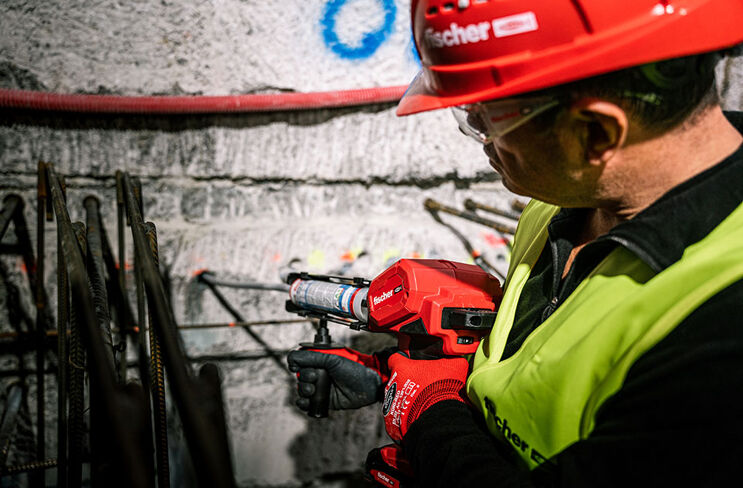
The fatigue behaviour of fastening systems depends significantly on the material properties, e.g. the steel grade, the anchoring conditions, and environmental influences. Chemical systems distribute forces over a large area, which reduces stress peaks and increases fatigue resistance. This makes them particularly suitable for demanding dynamic applications. Mechanical bolt anchors are characterised by high robustness and are suitable for moderate dynamic applications.
Cyclic load tests are indispensable to ensure that fastening systems do not lose their load-bearing capacity even after millions of load cycles. Additional challenges arise from extreme environmental conditions, such as severe temperature fluctuations or aggressive chemical exposures, e.g. from a corrosive atmosphere of exhaust engines.

Fixing systems in tunnel construction – such as mechanical bolt anchors or chemical injection systems – are often exposed to cyclic forces. These arise from recurring loads, for example from the traffic of trains, trucks or subways. Cyclic forces lead to vibrations and micro-movements that stress the building structure and fastening elements. A key requirement for the fixing systems is therefore fatigue resistance to prevent material failure such as fractures or loosening.
Chemical fixings, such as injection systems, offer the advantage of uniform force transmission in the anchoring area. This makes them particularly suitable for cyclic loads such as vibrations or frequent load changes. Mechanical bolt anchors, which are fixed by form fit or friction in the material, score with immediate load bearing.
To demonstrate the suitability of fixing systems, comprehensive testing and approvals are required. General building authority approvals (abZ) from the German Institute for Construction Technology (DIBt) as well as European Technical Assessments (ETA) ensure that products are tested for load-bearing capacity, fatigue resistance and corrosion resistance. For international projects, products are often assessed according to the ICC Evaluation Service and additional certifications according to ASTM or ISO standards are required.
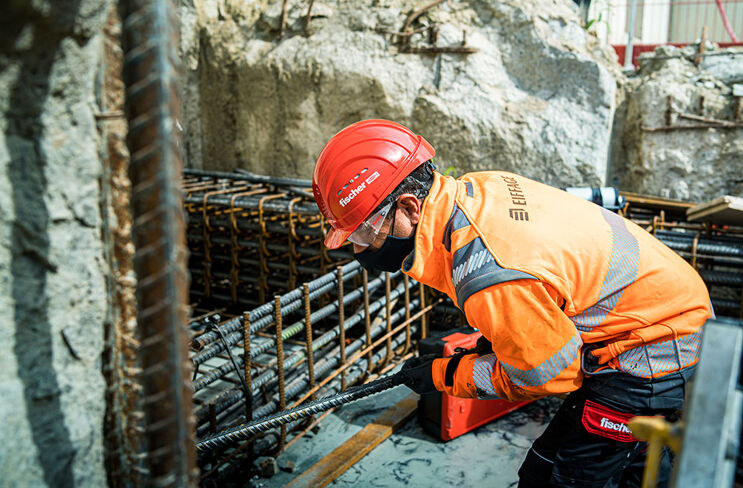
When renovating tunnel structures, fastening systems must be flexibly adapted to the often heterogeneous and damaged substrate. Chemical anchors are ideal for cracked or brittle material, as the anchoring is expansion-free. Mechanical bolt anchors, on the other hand, are the first choice when immediate load transfer is required or chemical systems are less suitable due to environmental conditions, such as extreme fire exposure. Both systems contribute significantly to stabilising existing structures and integrating new load-bearing structures.
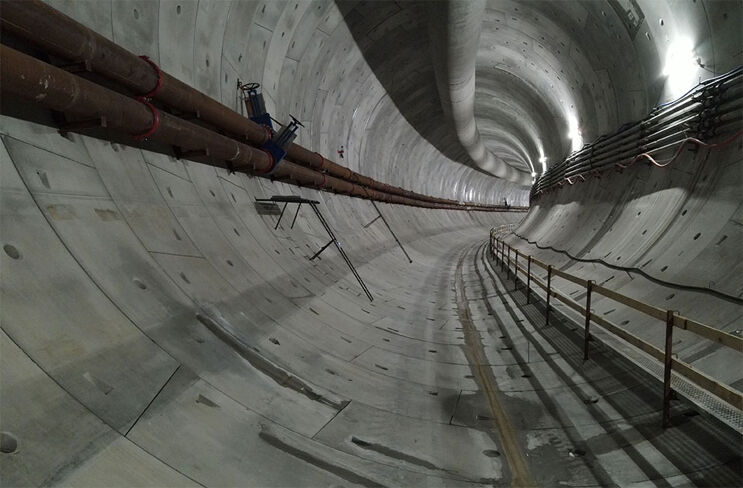
Systems such as cable trays, ventilation, or piping systems are tested not only for fire resistance but also for functionality in the event of a fire. The fire resistance duration of these systems is specified for use in tunnels according to specially developed tunnel fire curves.