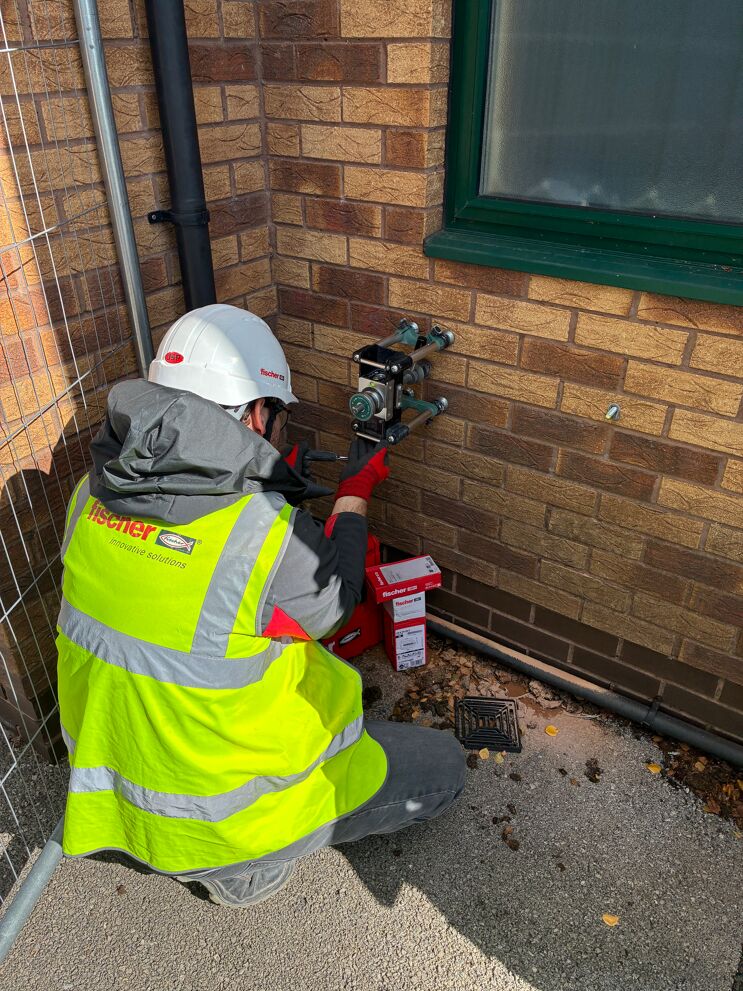
For construction fixings, compliance is not just about selecting a product. It is about being able to demonstrate that the design, selection, installation, supervision and records were managed correctly. In the UK, BS 8539 is the recognised guidance that brings those steps together and supports a compliant approach aligned with the Building Safety Act expectations for competence, accountability and traceability. That matters because anchor performance is only as reliable as the process used to specify and install it.
Site testing is sometimes seen as a default requirement. In reality, BS 8539 and CFA guidance define site testing for two clear purposes:
Installation Check (Proof Test)
To confirm installation quality for a sample of working anchors.
Allowable Resistance Testing
To establish a safe resistance where published data cannot reasonably be relied upon, most commonly in masonry.
Choosing the right test starts with a simple question: are we checking workmanship, or are we checking performance in the substrate?
What it is?
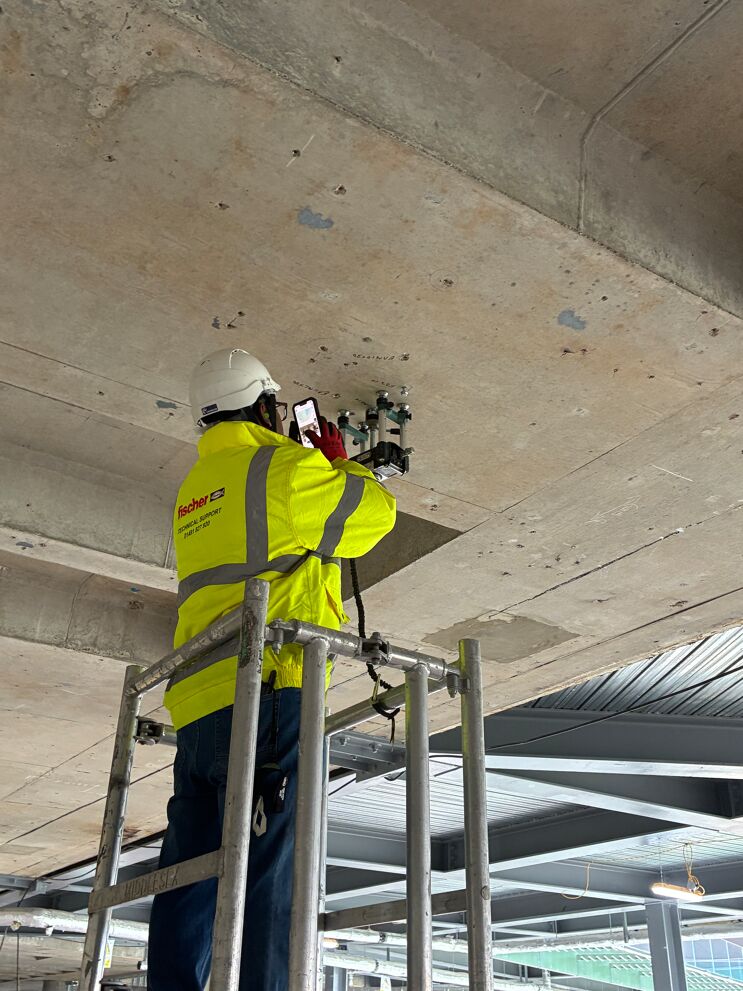
An Installation Check (Proof Test) applies a controlled load to a sample of installed anchors to confirm they can sustain the required proof load without unacceptable movement, damage or deformation.
Why it is requested?
An Installation Check (Proof Test) is typically requested where:the fixing is safety-critical and additional assurance is required,installation quality is a concern due to access, programme pressure or multiple install teams,the project wants evidence beyond routine supervision.
How an Installation Check (Proof Test) can become unnecessary?
If the objective is to demonstrate correct installation, BS 8539 already provides a stronger route than “let’s pull a few and hope”.
Under BS 8539 and in the spirit of the Building Safety Act:
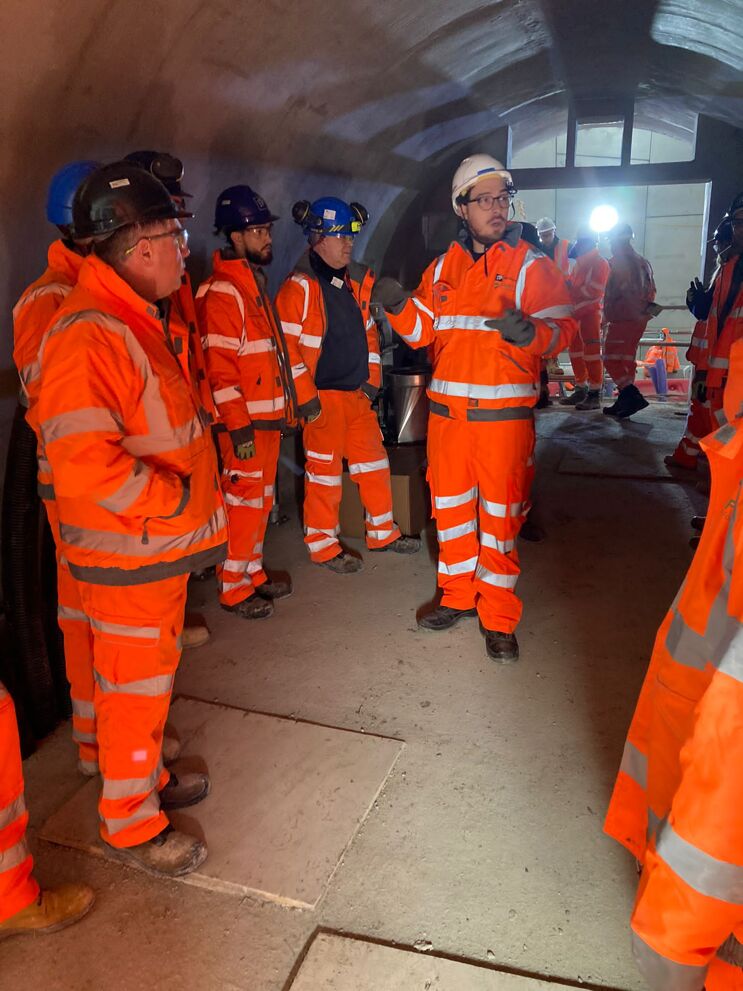
That is why Fischer provides free technical support and toolbox talks to help confirm competence and correct process on site. And BS 8539, supported by CFA documentation, provides practical certification routes such as an Installation Certificate signed off by supervision and filed in project records.
When you have toolbox talk attendance, a competent supervision process, and the installation certification captured as part of project documentation, you have demonstrable evidence of compliance and control.
Not only is that more cost-effective. It is free anyway. It is also the safer outcome.
What it is?
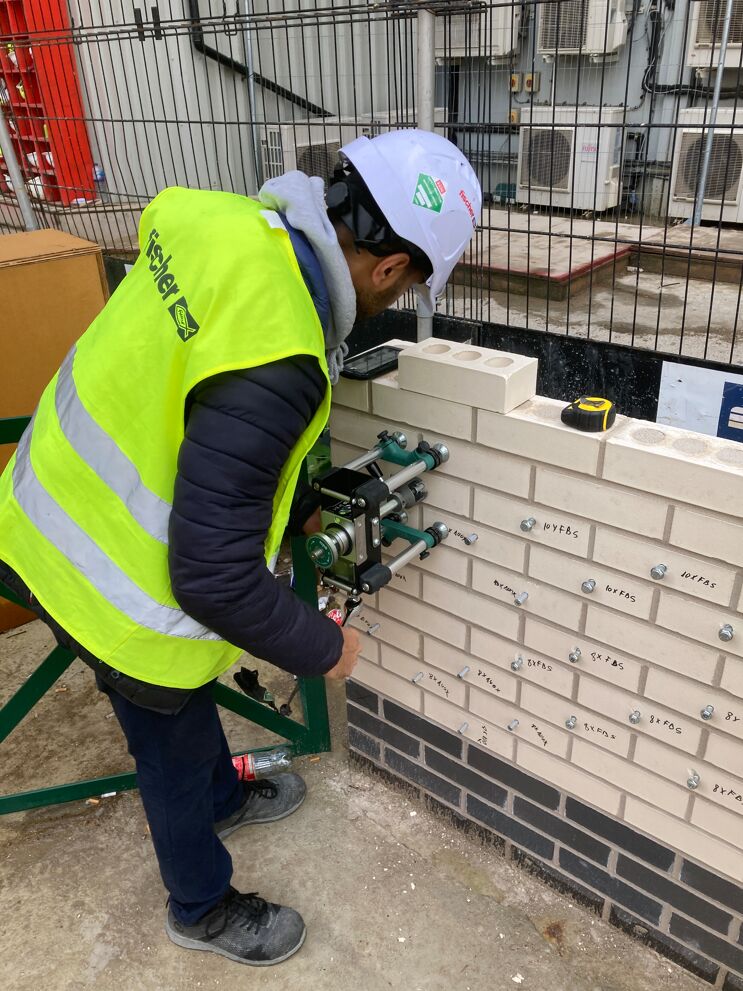
Allowable Resistance testing is used when the base material or conditions are not sufficiently covered by approvals or reliable published data, and a safe resistance must be established from site evidence. This is particularly common in masonry, where the substrate can vary significantly.
Why it is requested?
Allowable Resistance testing is typically requested when:
How allowable resistance testing can be reduced or avoided?
The most effective first step is not testing. It is technical review. Fischer’s technical team can support you by:
A key factor is timing. If the substrate differs from the designer’s assumption, the earlier this is identified, the more effective the solution becomes, whether that is selection, redesign, or a targeted test plan. Base material compliance with specification sits with the main contractor, so early verification of substrate conditions is crucial.
Good tests start with clear objectives. To plan and deliver testing effectively, we typically require:
This information is captured in our Site Test Request Form, which allows our technical team to confirm the correct test method and scope.
Site testing is a specialist service and is chargeable.
However, pricing is not guessed. Charges are confirmed after you submit the Site Test Request Form and our technical team has reviewed the scope, loads, access constraints, test quantity and reporting requirements.
One point is often misunderstood.
BS 8539 and CFA guidance are clear; the tester’s responsibility is to follow the agreed test procedure and accurately report the results.
What those results mean for acceptance, suitability, design actions and remedial decisions sits with the party who specified and requested the test, supported by the responsible engineer.
This distinction matters. A test report is evidence. It is not automatic approval.
Have you already used Fischer’s free technical support to confirm that your anchor application is aligned with BS 8539 and therefore supports a Building Safety Act compliant process?
This includes:
Using technical support is not just the most economical route. It is free anyway. And it is the safer route.
Have you already confirmed that:
If site testing is still required: